
Layer 01 · Stack Logic
Standardized infrastructure base
Unified compute, network, and storage profiles establish predictable performance baselines and controlled deployment patterns across enterprise environments.
Infrastructure Architecture
ECXI architecture is organized as a controlled stack: standardized compute and data foundations, security-enforced operations, orchestrated workload routing, governance checkpoints, and resilience layers that keep critical enterprise systems dependable under changing demand.
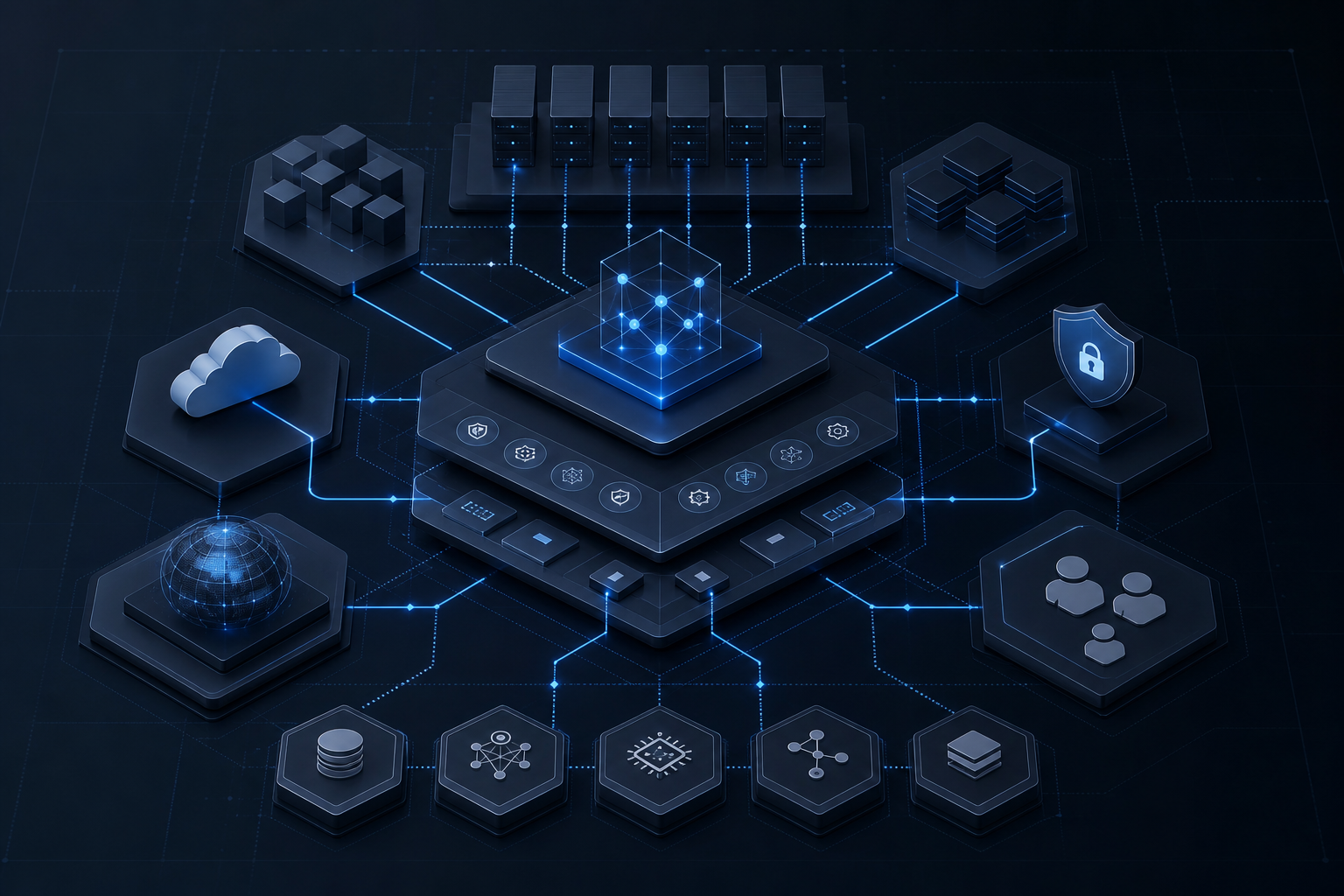
Layer 01 · Stack Logic
Unified compute, network, and storage profiles establish predictable performance baselines and controlled deployment patterns across enterprise environments.
Layer 02 · Secure Operations
Access segmentation, policy enforcement, and continuous control telemetry reduce operational drift and support regulated enterprise operating models.
Layer 03 · Orchestration
Policy-aware orchestration directs AI and enterprise workloads to approved environments with auditable scheduling and consistent runtime standards.
Layer 04 · Governance
Formal review checkpoints align technical change with enterprise risk criteria, procurement requirements, and operational accountability.
Layer 05 · Resilience
Redundant pathways, recovery playbooks, and tested failover sequencing sustain core services and protect enterprise uptime objectives.